ShopDreamUp AI ArtDreamUp
Deviation Actions




Description
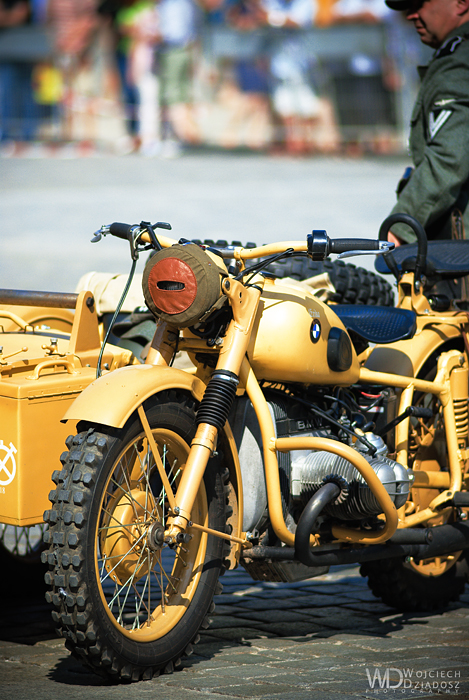
reconstruction of the battle in Wroclaw.
-------------
The Warsaw Uprising (Polish: powstanie warszawskie) was a major World War II operation by the Polish resistance Home Army (Polish: Armia Krajowa) to liberate Warsaw from Nazi Germany. The rebellion was timed to coincide with the Soviet Union's Red Army approaching the eastern suburbs of the city and the retreat of German forces. However, the Soviet advance stopped short, enabling the Germans to regroup and demolish the city while defeating the Polish resistance, which fought for 63 days with little outside support. The uprising began on 1 August 1944, as part of a nationwide plan, Operation Tempest, when the Soviet Army approached Warsaw. The main Polish objectives were to drive the German occupiers from the city and help with the larger fight against Germany and the Axis powers. Secondary political objectives were to liberate Warsaw before the Soviets, to underscore Polish sovereignty by empowering the Polish Underground State before the Soviet-backed Polish Committee of National Liberation could assume control. Also, short-term causes included the threat of a German round-up of able-bodied Poles, and Moscow radio calling for the Uprising to begin. Initially, the Poles established control over most of central Warsaw, but the Soviets ignored Polish attempts to establish radio contact and did not advance beyond the city limits. Intense street fighting between the Germans and Poles continued. By 14 September, Polish forces under Soviet high command occupied the east bank of the Wisła River opposite the insurgents' positions; but only 1,200 men made it across to the west bank, and they were not reinforced by the bulk of the Red Army. This, and the lack of Soviet air support from a base 5 minutes flying time away, led to allegations that Joseph Stalin tactically halted his forces to let the operation fail and allow the Polish nationalists to be crushed. Winston Churchill pleaded with Stalin and Franklin D. Roosevelt to help Britain's Polish allies, to no avail. Then, without Soviet air clearance, Churchill sent over 200 low-level supply drops by the Royal Air Force, the South African Air Force and the Polish Air Force under British High Command. Later, after gaining Soviet air clearance, the US Army Air Force sent one high-level mass airdrop as part of Operation Frantic. Although the exact number of casualties remains unknown, it is estimated that about 16,000 members of the Polish resistance were killed and about 6,000 badly wounded. In addition, between 150,000 and 200,000 Polish civilians died, mostly from mass murders. Jews being harboured by Poles were exposed by German house-to-house clearances and mass evictions of entire neighbourhoods. German casualties totalled over 8,000 soldiers killed and missing, and 9,000 wounded. During the urban combat approximately 25% of Warsaw's buildings were destroyed. Following the surrender of Polish forces, German troops systematically leveled another 35% of the city block by block. Together with earlier damage suffered in the 1939 invasion of Poland and the Warsaw Ghetto Uprising in 1943, over 85% of the city was destroyed by January 1945, when the Soviets entered the city - Wikipedia
------------------
All my works are ©Wojciech Dziadosz with all rights reserved. My images may not be reproduced in any form without my written permission.
-------------
The Warsaw Uprising (Polish: powstanie warszawskie) was a major World War II operation by the Polish resistance Home Army (Polish: Armia Krajowa) to liberate Warsaw from Nazi Germany. The rebellion was timed to coincide with the Soviet Union's Red Army approaching the eastern suburbs of the city and the retreat of German forces. However, the Soviet advance stopped short, enabling the Germans to regroup and demolish the city while defeating the Polish resistance, which fought for 63 days with little outside support. The uprising began on 1 August 1944, as part of a nationwide plan, Operation Tempest, when the Soviet Army approached Warsaw. The main Polish objectives were to drive the German occupiers from the city and help with the larger fight against Germany and the Axis powers. Secondary political objectives were to liberate Warsaw before the Soviets, to underscore Polish sovereignty by empowering the Polish Underground State before the Soviet-backed Polish Committee of National Liberation could assume control. Also, short-term causes included the threat of a German round-up of able-bodied Poles, and Moscow radio calling for the Uprising to begin. Initially, the Poles established control over most of central Warsaw, but the Soviets ignored Polish attempts to establish radio contact and did not advance beyond the city limits. Intense street fighting between the Germans and Poles continued. By 14 September, Polish forces under Soviet high command occupied the east bank of the Wisła River opposite the insurgents' positions; but only 1,200 men made it across to the west bank, and they were not reinforced by the bulk of the Red Army. This, and the lack of Soviet air support from a base 5 minutes flying time away, led to allegations that Joseph Stalin tactically halted his forces to let the operation fail and allow the Polish nationalists to be crushed. Winston Churchill pleaded with Stalin and Franklin D. Roosevelt to help Britain's Polish allies, to no avail. Then, without Soviet air clearance, Churchill sent over 200 low-level supply drops by the Royal Air Force, the South African Air Force and the Polish Air Force under British High Command. Later, after gaining Soviet air clearance, the US Army Air Force sent one high-level mass airdrop as part of Operation Frantic. Although the exact number of casualties remains unknown, it is estimated that about 16,000 members of the Polish resistance were killed and about 6,000 badly wounded. In addition, between 150,000 and 200,000 Polish civilians died, mostly from mass murders. Jews being harboured by Poles were exposed by German house-to-house clearances and mass evictions of entire neighbourhoods. German casualties totalled over 8,000 soldiers killed and missing, and 9,000 wounded. During the urban combat approximately 25% of Warsaw's buildings were destroyed. Following the surrender of Polish forces, German troops systematically leveled another 35% of the city block by block. Together with earlier damage suffered in the 1939 invasion of Poland and the Warsaw Ghetto Uprising in 1943, over 85% of the city was destroyed by January 1945, when the Soviets entered the city - Wikipedia
------------------
All my works are ©Wojciech Dziadosz with all rights reserved. My images may not be reproduced in any form without my written permission.
Image size
469x700px 404.88 KB
Make
NIKON CORPORATION
Model
NIKON D200
Shutter Speed
1/2000 second
Aperture
F/2.8
Focal Length
180 mm
ISO Speed
100
Date Taken
Aug 5, 2012, 3:49:30 PM
© 2012 - 2024 WojciechDziadosz
Comments2
Join the community to add your comment. Already a deviant? Log In
BMW R75 Sahara...ja kcę...